


Ferrets as Pets Everything You Need to Know Before Adopting One
28 May 2026

Is a ferret the right pet for every family? Why do ferrets sleep so much if they are so energetic? What care should you plan for before adopting a domestic ferret?
In this blog article, our Scientific Director Roxanne Brunelle answers these questions while helping you discover ferret behavior, daily needs, diet, and the responsibilities that come with adoption.
Domestic ferrets are becoming increasingly popular in Quebec. They are funny, curious, and full of personality. But behind their adorable appearance is a complex animal with very specific needs that should never be underestimated.
At Éducazoo, our naturalists often meet families surprised to learn just how intelligent… and demanding… ferrets can be.
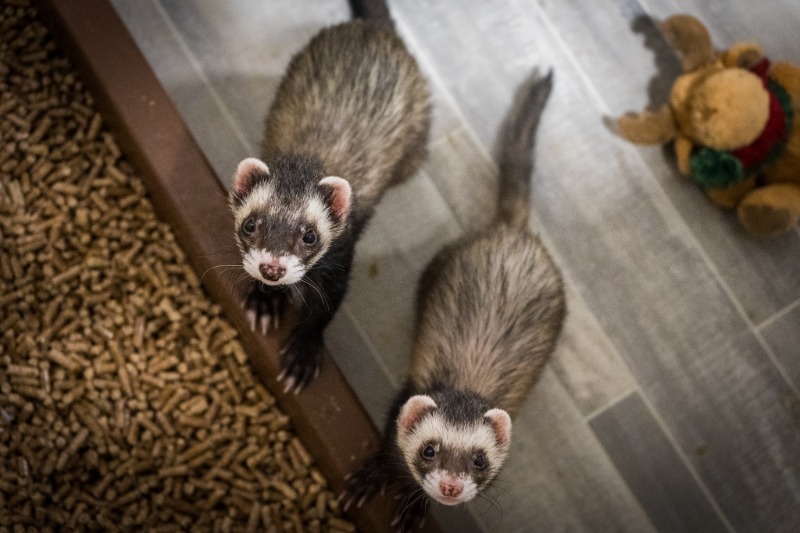
The ferret : A Surprising Cousin of the Otter
The ferret belongs to the mustelid family. Other well-known members of this family include otters, minks, and badgers. Even though their lifestyles differ from one species to another, many physical and behavioral traits are similar. Mustelids are especially known for their long bodies, curiosity, and incredible agility.
Like the otter, the ferret has a long, flexible body that allows it to squeeze into extremely tight spaces. This body shape is actually one of the reasons ferrets were domesticated. They were once used for rabbit hunting because they could enter burrows and drive prey toward waiting hunters. Ferrets were even used to pull wiring through airplane fuselages. Today, however, they are mainly known as companion animals.
Domestic ferrets are appreciated for their affectionate personalities, intelligence, and curiosity. At Éducazoo, César the ferret loves digging through blankets and hiding his favorite toys in unexpected places. This behavior is part of his natural exploration instinct.
An Energetic Animal... That Sleeps Constantly
One of the most surprising things about ferrets is their sleep schedule. A ferret can sleep between 16 and 20 hours a day. Yes — almost the entire day!
But once awake, they become little tornadoes. They run, climb, jump, and explore absolutely everything around them. This cycle of long naps and intense activity is completely normal.
Ferrets need a great deal of daily mental and physical stimulation. Without enough activity, they can develop problematic behaviors such as biting or aggression. Much like a bored child, a ferret eventually finds its own entertainment… and humans do not always appreciate the results!
When particularly happy, ferrets may perform a playful “war dance.” They hop around in every direction while making high-pitched noises. This behavior is often an excellent sign of well-being.
Intelligence That Is Often Underestimated
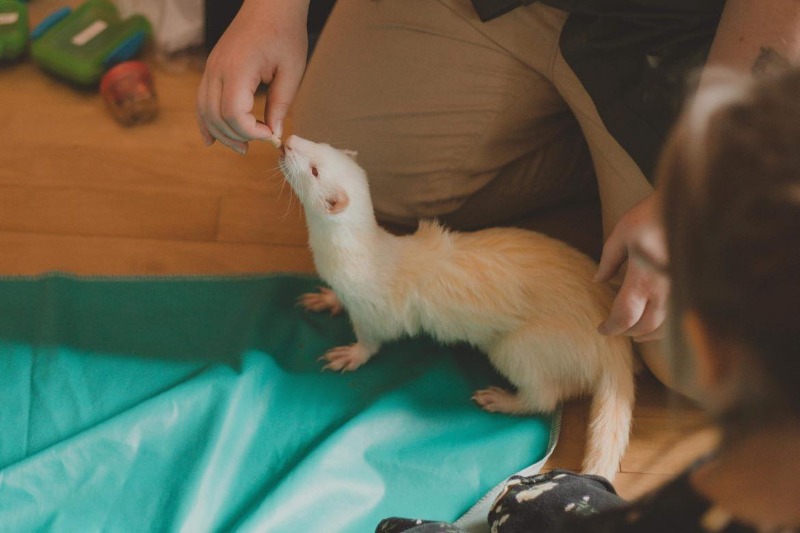
Ferret behavior surprises many new owners. These animals have excellent memories and learn very quickly.
Some ferrets recognize their names, open doors, or memorize hiding spots throughout the house. They can also learn small tricks using positive reinforcement.
This intelligence explains why a stimulating environment is essential for their well-being. Tunnels, interactive toys, and supervised exploration time are all extremely important in their daily lives.
At Éducazoo, our Animal Care Specialists regularly modify the ferrets’ habitats to stimulate their curiosity. Even a simple change in scent or hiding spot can become an exciting activity for them.
A Proper Environment Is Essential
Even though they are small, ferrets require plenty of space. A tiny cage alone is not enough to meet their needs.
An appropriate habitat should include:
-
Tunnels: to recreate their natural exploration instincts
-
Hiding spots: to promote a sense of security
-
Platforms: for climbing and movement
-
Durable toys: without soft rubber or fragile plastic
Ferrets have powerful teeth and can easily destroy certain objects. If they swallow plastic pieces, it can lead to an intestinal blockage, which is a common veterinary emergency in this species.
Homes must also be carefully secured. Ferrets can squeeze behind appliances, crawl into couches, or climb into unexpected places. Many owners quickly discover that ferrets can fit through openings far smaller than expected.
A Strictly Carnivorous Diet
Unlike many small mammals, the ferret is an obligate carnivore. Its digestive system is designed primarily for animal proteins and is highly sensitive to dietary changes.
An inappropriate diet can quickly lead to health problems. Kibble containing green peas, for example, is often discouraged because it may contribute to bladder stones.
The ferret’s digestive system works extremely quickly. Food passes through the body within only a few hours. This means they require near-constant access to appropriate food.
At Éducazoo, our Animal Care Specialists carefully monitor the ferrets’ diets to maintain proper nutrition and help prevent common illnesses.
A Social and Affectionate Animal
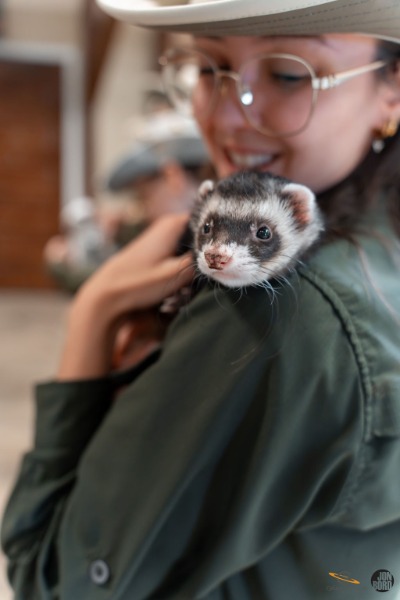
Ferrets love interacting with humans. Many even develop very unique habits with their families.
Ferrets can coexist successfully with certain cats and dogs when properly socialized. However, interactions with prey animals such as rabbits or guinea pigs should always be avoided.
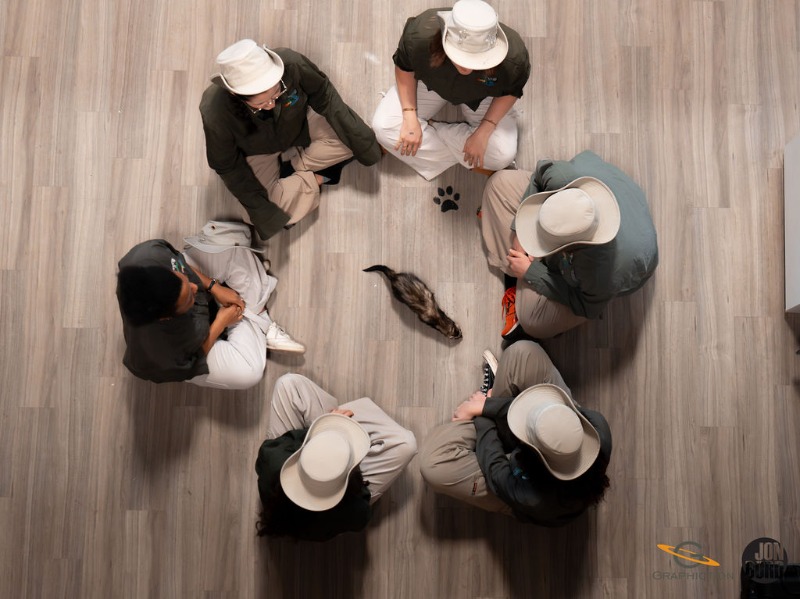
At Éducazoo, our ferrets especially enjoy visits and educational activities on the road. These experiences provide valuable stimulation through new smells, new people, and the attention they receive.
Their expressive and sometimes clumsy personalities often create hilarious moments that participants never forget.
Veterinary Care to Consider
Like many exotic animals, ferrets require specialized veterinary care. Certain diseases become particularly common as they age.
Among the best known are insulinoma, a disease affecting the pancreas, and adrenal gland disorders linked to sex hormones. These illnesses commonly appear around four years of age. Females are often less affected, although they can still develop these conditions.
Before adopting a ferret, future owners should plan for specialized food, veterinary costs, daily enrichment, and a secure environment.
Ferrets require much more involvement than most people initially expect.
The Ferret: A Fascinating Companion
Ferrets make excellent pets for people who take the time to properly educate themselves and who are ready to invest both financially and personally through daily interaction and stimulation.
Their intelligence, curiosity, and expressive personalities often create incredibly strong bonds with their owners.
At Éducazoo, ferrets also help demonstrate that even small animals can have highly complex needs and advanced behaviors. When people truly take the time to understand them, they quickly discover an animal full of surprises.
To learn more about ferrets, their unique characteristics, and their specific needs, explore our educational video series created in collaboration with Arthur, the ferret expert who offers nutrition specifically adapted to the ferret’s delicate digestive system.


