


Exotic Pets Most Often Lost Outdoors What Are the Risks to Their Health ?
17 June 2026

Why can a simple outing become dangerous for an exotic pet? Which animals are most often found wandering outdoors by concerned citizens? How can you protect your companion from the risks associated with an unsafe outdoor adventure?
In this blog article, our biologist Roxanne Brunelle answers these questions and explains why exotic pets that become lost outdoors are particularly vulnerable. You will discover the main dangers faced by rodents, reptiles, birds, and other small mammals when they escape, along with practical advice to help prevent accidents and respond quickly in an emergency.
Why Are So Many Exotic Pets Found Outdoors?
Every year, citizens contact shelters, municipalities, and animal sanctuaries after finding exotic pets wandering in backyards, parks, or even busy streets. Unlike wild animals, these companions have often never learned how to survive on their own in nature.
A poorly planned outing, an ill-fitting harness, an improperly secured carrier, or simply a moment of inattention can be enough to trigger an escape. For many species, just a few hours outdoors can already lead to serious health consequences.


Rats, Hamsters, and Guinea Pigs: A High Risk of Heat Stroke
Domestic rats, hamsters, and guinea pigs are among the most popular small mammals in Quebec households. They are also highly vulnerable to heat exposure during outdoor excursions.
Unlike humans, horses, and primates, most mammals have few or no functional sweat glands. In other words, they cannot effectively cool themselves by sweating as we do.
During an outing on a hot day, these animals can quickly develop hyperthermia, a dangerous increase in body temperature. This condition may lead to breathing difficulties, loss of consciousness, and in severe cases, death.
Signs of heat stroke in these small mammals may include rapid breathing, lethargy, severe weakness, or unusual body posture.
If your pet appears overheated:
-
Move it immediately to a cool, shaded area
-
Offer fresh water
-
Place a slightly damp towel nearby
-
Avoid icecold water, which may cause thermal shock
-
Contact a veterinarian promptly if the condition does not improve
A common question searched online is: How do I know if my hamster is too hot? The best prevention is limiting outdoor activities during hot and humid weather.

Lost Reptiles: Cold Can Be Deadly
Unlike mammals, exotic reptiles depend entirely on their environment to regulate body temperature. This process is known as ectothermy.
A Bearded Dragon, Ball Python, or Leopard Gecko lost outdoors during a cool day or cold night can quickly become unable to function normally. As their body temperature drops, their metabolism slows dramatically.
A chilled reptile may appear motionless, weak, or even dead despite still being alive.
If you find a reptile that seems cold:
-
Place it in a secure container
-
Warm it gradually
-
Use a blanket or a moderately warm room
-
Avoid placing it directly on an intense heat source
-
Consult a reptile veterinarian as soon as possible
Because many reptiles are fast-moving escape artists, it is generally safer to avoid outdoor excursions unless they are transported in species-appropriate carriers.
Exotic Birds: An Escape That Quickly Becomes Serious
Parrots, conures, cockatiels, and many other exotic birds are among the most frequently reported lost pets during the summer months.
An open window, a partially opened front door, or a poorly adjusted harness can instantly leave a bird on its own in an unfamiliar environment. Even highly bonded birds may unexpectedly fly away due to a loud noise, a passing dog, a truck, or a sudden gust of wind. Within seconds, they can travel hundreds of meters away.
A lost exotic bird may then suffer from severe stress, dehydration, malnutrition, or predation. Crows, birds of prey, cats, and certain mammals represent significant threats to their survival.
Using a properly fitted bird harness remains one of the most effective preventive measures for owners who enjoy taking their birds outdoors. The harness should be carefully adjusted and introduced gradually through positive training.
However, some birds never accept wearing a harness. In such cases, outdoor outings should be avoided for the bird’s safety and well-being.
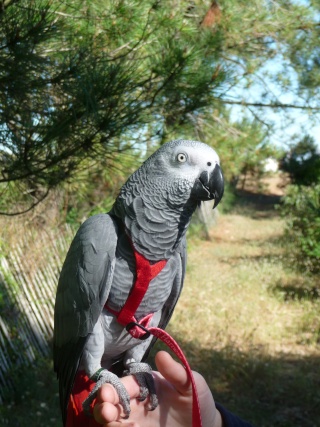
Photo Credit: Le Monde des Perroquets
How Can You Recover a Lost Exotic Bird?
If a lost parrot is spotted in a tree or on a building, it is important to remain calm.
Specialists often recommend the following strategies:
-
Bring its habitat near the location where it was seen
-
Play familiar sounds the bird hears at home
-
Use favorite treats as incentives
-
Post alerts in specialized bird recovery groups to maintain sightings and updates
In Quebec, the organization Perroquet Secours is often an invaluable resource when recovering lost exotic birds.
In general, the faster the response, the greater the chances of recovering the bird before it travels farther away.
Parasites: A Risk Often Underestimated
Even when a pet appears healthy after being found outdoors, it may have been exposed to numerous external and internal parasites.
Ferrets, reptiles, and small mammals that spend time outside can encounter ticks, fleas, mites, and various intestinal parasites.
Parasites in exotic animals are not always visible to the naked eye. However, several signs may indicate a problem:
-
Excessive scratching
-
Hair or feather loss
-
Small scabs or skin lesions
-
Reduced appetite
-
Abnormal droppings
-
Weight loss
Following any escape or prolonged outdoor exposure, a preventive veterinary examination is always a wise precaution.

Prevention Remains the Best Protection
Most situations involving lost exotic pets can be prevented through a few simple precautions: using properly fitted harnesses, checking the condition of travel carriers, avoiding extreme temperatures, and supervising all outdoor activities closely.
At Éducazoo, our mission is both to educate and protect animals. Every year, we help animals that have experienced difficult circumstances. By sharing best practices with the public, we contribute to reducing accidental escapes, abandonment, and the often serious consequences that follow.
Better understanding the needs of exotic companion animals is one of the best ways to provide them with a safer life that respects their welfare.


