


Research Projects in Belize When a Passion for Animals Goes Beyond the Job
22 May 2026

For many members of our team, their passion for wildlife also influences their studies, personal projects, and even the destinations they choose to travel to.
At Éducazoo, our love for animals doesn’t stop at the sanctuary doors. For several members of our team, this fascination with wildlife shapes their education, hobbies, and everyday lifestyle.
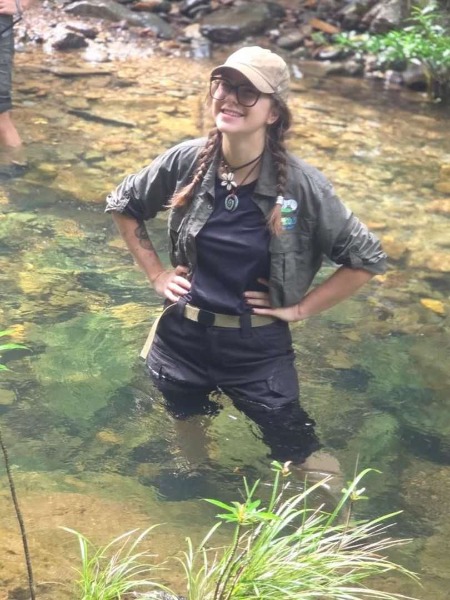
That’s especially true for Sienna and Xavier, two employees at Éducazoo Inc. who are also students in Bioecology Technology. They recently returned from Belize, in Central America, where they chose to travel alongside classmates for their final research project.
From January 5 to 20, 2026, they participated in a field research project at T.R.E.E.S. (Toucan Ridge Ecology Education Society), a research and education center located deep in the Belizean jungle. Accompanied by around twenty students and two supervising teachers, they experienced a complete scientific immersion in one of the most biodiverse environments in the world.
Studying Turtles and Scorpions
As part of the trip, each student had to complete a final research project related to bioecology.
Sienna’s Project: Turtle Movements
Sienna focused her research on the White-lipped Mud Turtle (Kinosternon leucostomum), a semi-aquatic species living in Belizean waterways.
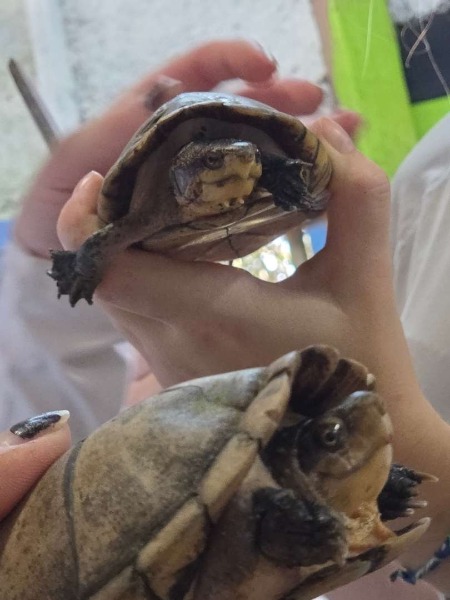
White-lipped mud turtle (Kinosternon leucostomum)
Her project aimed to determine whether environmental conditions such as humidity, temperature, and rainfall influenced the turtles’ daily movements.
The first observations were particularly interesting. Before heavy rainstorms, several turtles left the water and moved onto land, likely anticipating flooding conditions. Humidity appeared to be the factor with the greatest influence on their movements, combining both rainfall and temperature effects.
This type of behavior highlights how some animals can detect environmental changes long before humans can notice them.
Xavier’s Project: Scorpions and Their Habitats

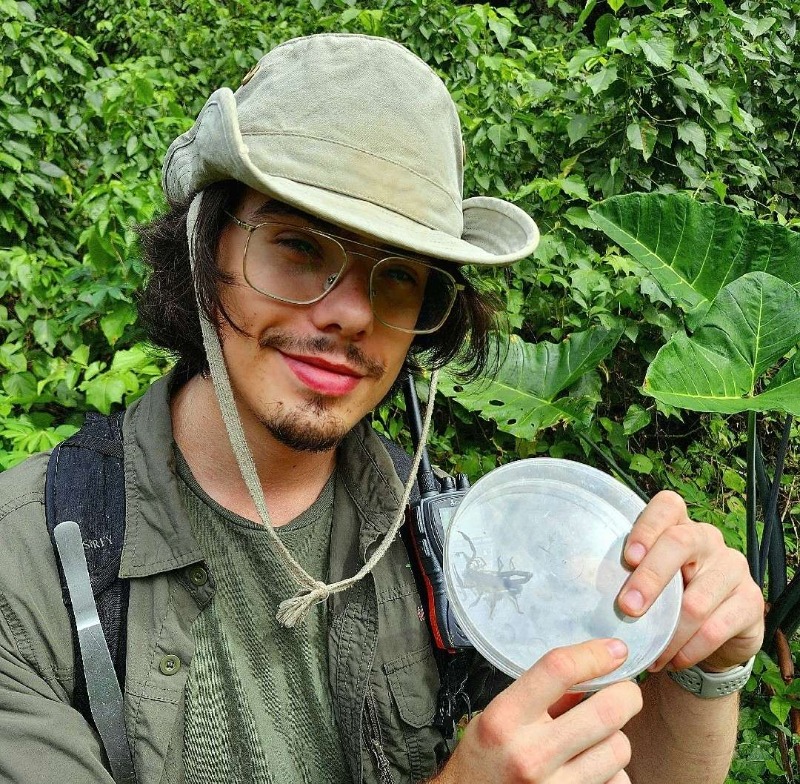
Xavier and Centruroides gracilis
Meanwhile, Xavier studied the preferred habitats of different scorpion species found around the TREES research site.
During multiple field outings, his team observed that:
The Common House Scorpion (Centruroides gracilis) is a more wandering species that frequently hunts in disturbed environments impacted by human activity.
The Bark Scorpion (Centruroides schmidti) is much more common in forested areas. This arboreal species spends most of its time hidden beneath tree bark due to its small size.
These observations help researchers better understand how species adapt according to their physical characteristics, diet, and role within the food chain.
Incredible Biodiversity
Belize is well known for its exceptional biodiversity. During their stay, the students had the opportunity to observe an impressive variety of animal species.
Among their most memorable encounters were boas, red-rumped tarantulas, red-eyed tree frogs, fer-de-lance snakes, armadillos, toucans, amblypygids, and several marine species including manta rays, spotted eagle rays, and stingrays.
They also came across jaguar tracks in the jungle. Although these large cats live throughout the region, they remain extremely discreet and generally avoid humans, much like black bears in Quebec.
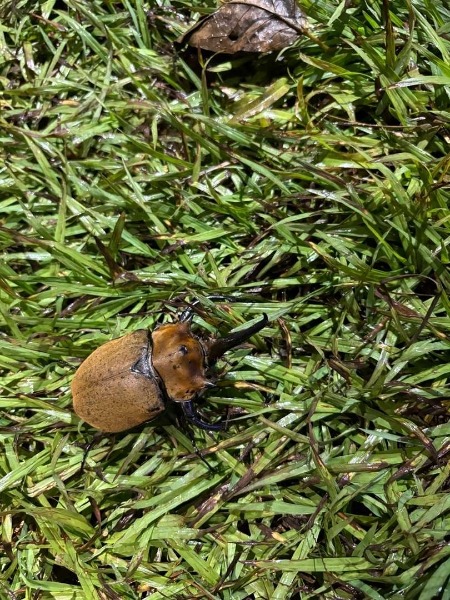
Elephant beetle (Megasoma elephas)
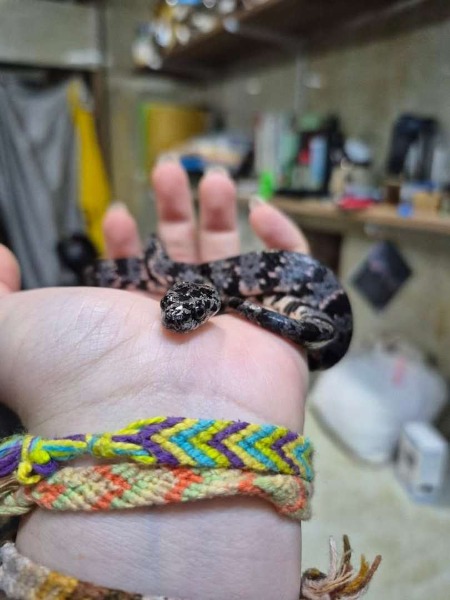
Cloudy snail-eating snake (Sibon nebulatus)
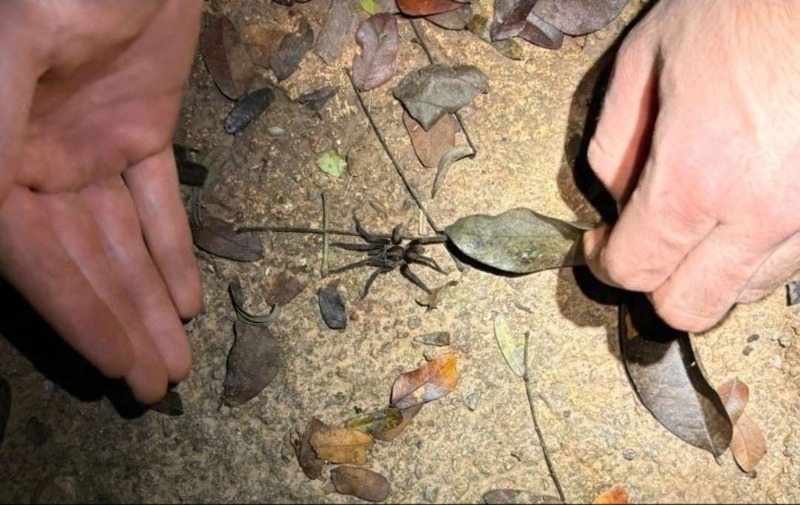
Red-rumped tarantula (Tliltlocoalt vagans)
Cultural Differences in Human-Animal Relationships
The internship also allowed the students to observe cultural differences in how people interact with animals.
In Belize, certain practices are sometimes less regulated than in Canada. For example, some people still believe that a turtle’s shell has no sensitivity, which can lead to rougher handling. In reality, turtle shells contain nerves and can feel touch.
They also noticed fewer regulations surrounding certain scientific practices. In Canada, bird banding requires hundreds of hours of training and specialized permits, while in Belize there are currently no official requirements governing the process.
The perception of danger around certain species also seemed different. Potentially dangerous animals such as boas or venomous arthropods were sometimes handled with far fewer precautions than would typically be seen here.
A Human Experience as Much as a Scientific One
Beyond the research itself, the experience gave students the opportunity to discover a culture very different from our own.
They described the people of Belize as particularly calm, relaxed, and less stressed, living at a much slower pace than what we are used to in Quebec.
They also realized how connected our ecosystems truly are. Several bird species we observe here in Quebec migrate annually to Belize, directly linking our two regions despite the distance between them.
A Passion That Goes Beyond the Sanctuary
At Éducazoo, many employees continue pursuing studies and personal projects related to animals and the environment. Their passion extends far beyond their daily work at the sanctuary — it is part of who they are.
Experiences like this final research project in Belize not only provide valuable scientific knowledge, but also help develop a deeper understanding of ecosystems and conservation challenges around the world.


